 Applied
Product Overview
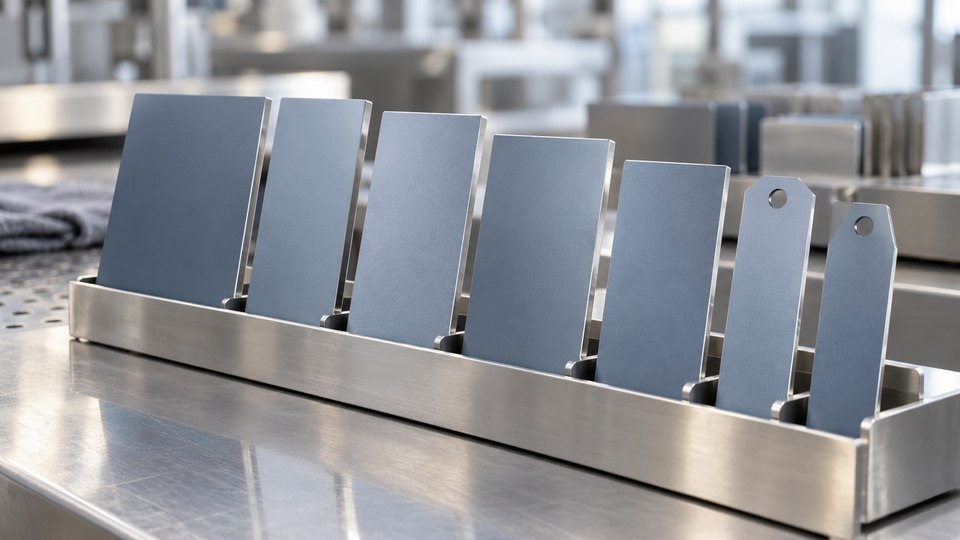
KOBOND™ 4023 promotes interaction between coatings and difficult metal surfaces. Its high-molecular-weight structure contains multiple anchoring groups, while hydroxyl functionality can participate in crosslinking with suitable resins. The supplied TDS describes adhesion, flexibility, impact resistance and color stability during high-temperature baking.
Key Features
- Promotes adhesion to aluminum, zinc, stainless steel and plated metal surfaces.
- Hydroxyl functionality can participate in suitable resin crosslinking.
- Can improve film flexibility and impact resistance.
- Supports color stability during baking, as described in the TDS.
Physical Properties
| Property | Reported value |
|---|---|
| Appearance | Yellow, transparent liquid |
| Nonvolatile matter | Min. 68 wt% |
| Solvent | 2-Butoxyethanol |
| Density (25°C) | 1.12 g/cm³ |
Selected values from the original TDS. Refer to that document for conditions and whether values are typical or specification limits.
Typical Applications
- Acrylic/melamine, alkyd/melamine and polyester/melamine baking coatings.
- Two-component polyurethane coatings.
- Coil coatings and other industrial coatings on aluminum, zinc, stainless steel and plated metals.
Technical Considerations
The TDS recommends 0.1–5.0% based on the total formulation. Determine the optimum level through laboratory trials. This product is not recommended for conventional air-drying coating systems.
Reported properties are typical, not specifications. Store tightly closed in a cool, dry, ventilated place. The stated unopened shelf life is 24 months from manufacture. Consult the current SDS before handling.
Technical Documentation
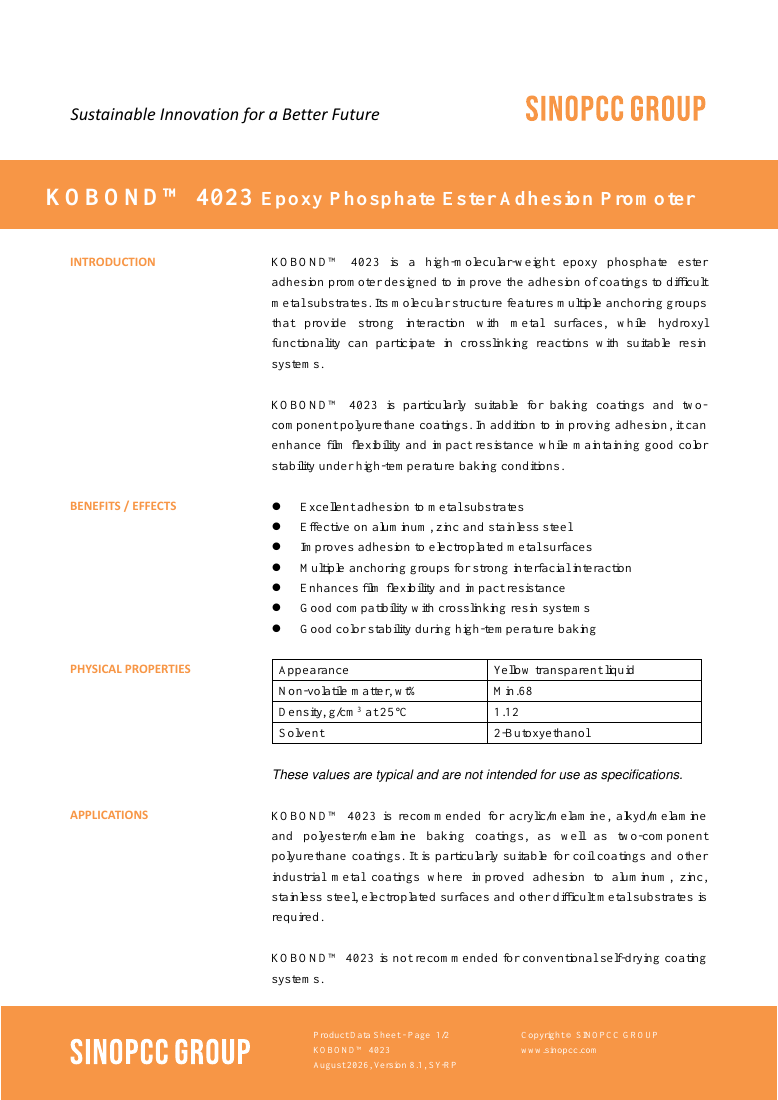
- Download Original TDS (PDF · 135 KB) ↓
KOBOND™ 4023 — Original TDS (English)
Open PDF in a new tab ↗
August 2026 · Version 8.1, SY-RP · English original · Unmodified
Official Product Website
Official product information and commercial inquiries are managed by the publishing brand.
KOBOND ↗